You have a velvet armchair you love. A mid-century credenza you scored at an estate sale. A modern geometric rug that finally arrived after six weeks of waiting. And a gallery wall you've been building piece by piece for three years.
The problem? You're not sure they go together.
Here's the truth that every seasoned interior designer knows: they probably do. And if they don't yet, a few intentional choices will make them feel like they were always meant to share a room.
Eclectic interior design isn't about chaos — it's about confidence. According to Homestyler's analysis of 18 million real-home projects, the era of a single dominant style is over. People aren't asking "what style is my home?" anymore — they're asking "how does my home reflect who I actually am?" And the answer, more often than not, is: a mix.
It's one of the most personal, livable, and increasingly celebrated approaches to decorating. And once you understand a few guiding principles, you'll stop second-guessing your instincts and start trusting them.
What Is Eclectic Interior Design?
Eclectic design means drawing from multiple styles, eras, and influences to create a space that feels uniquely yours. Think Scandinavian minimalism meeting Moroccan warmth. A Victorian settee next to a clean-lined IKEA shelf. Art Deco light fixtures over a farmhouse dining table.
Done well, eclectic decorating doesn't look random — it looks considered. Designers like Amber Lewis (@amberinteriors) built entire careers on this principle: pairing vintage finds with modern pieces in ways that feel relaxed and alive, never forced. Jonathan Adler makes it playful and sophisticated. Amber Lewis makes it feel like home.
The difference between "eclectic" and "chaotic" comes down to intention. When every piece earns its place through color, texture, or scale, the room reads as a coherent whole. Without that thread, even beautiful pieces feel like a storage unit.

The 60-30-10 Color Rule
The single most powerful tool for mixing decor styles is a deliberate color palette — and the 60-30-10 rule is how designers keep eclectic rooms from spinning out of control.
Here's how it works:
- 60% dominant color — your walls, large furniture, and flooring. This is the visual anchor.
- 30% secondary color — sofas, curtains, accent furniture. This creates depth and interest.
- 10% accent color — pillows, art, small decor. This is where you get to have fun.
For a typical eclectic living room, you might choose warm white as your 60%, cream or sand as your 30%, and blue velvet as your 10%. Every piece you bring in — regardless of its style origin — gets evaluated against those three colors. If it fits, it belongs.
This doesn't mean everything must match. It means everything should relate.
Start with a Neutral Base
When you're mixing furniture styles, give yourself a neutral foundation to work from. Walls in warm white, greige, or soft linen create a backdrop that makes almost any combination of styles feel intentional rather than accidental.
Your largest pieces of furniture — sofa, bed frame, dining table — should also skew neutral. Save the bold colors and distinctive silhouettes for the secondary and accent layers. A cream linen sofa is a blank canvas; a jewel-toned velvet sofa is a statement that must carry the whole room.
This isn't about playing it safe — it's about giving your eclectic pieces room to breathe. A rich antique cabinet against a neutral wall becomes art. The same cabinet competing with a patterned wallpaper becomes noise.
Mixing Old and New
The most interesting rooms have depth — and depth comes from mixing pieces across time. A smooth contemporary console table feels more alive with an ornate vintage mirror above it. A sleek modern sofa gets soul when paired with a worn leather trunk as a coffee table.
Some pairing principles that work consistently:
- Industrial + Organic: Raw metal pipes alongside live-edge wood and woven baskets
- Modern + Antique: Clean geometric lines next to carved wood or brass detail
- Minimal + Maximalist: One loud statement piece in an otherwise restrained room
- High + Low: A fine art print in a budget frame; a designer lamp on a vintage side table
The key is balance. For every piece that has weight and history, give it a quiet counterpart. Let contrast do the visual work.

Cohesion Through Material and Texture
When color isn't the unifying thread, material is. Repeating a material — natural wood, brushed brass, linen, rattan — across different-styled pieces creates invisible harmony.
Try this: walk through your room and identify which materials are represented. If you see wood, metal, and textile, make sure each appears in at least two or three places. A rattan side table next to a rattan pendant lamp. A brushed brass lamp base echoed in the brass knob on a vintage cabinet. A linen throw on the sofa that matches the linen lampshade.
Texture also prevents a room from feeling flat. Layer smooth with rough, matte with sheen, structured with soft. A velvet armchair next to a raw wood table is more interesting than two upholstered chairs — even if the chairs technically "match."
Pattern Mixing 101
Pattern mixing sounds risky, but it follows rules as clear as color theory.
Scale is everything. A large-scale floral can live peacefully with a small-scale geometric because they occupy different visual frequencies. When two patterns compete at the same scale, they clash.
Limit your palette, not your patterns. If your floral pillow and your geometric rug share the same three colors, they're in conversation — not conflict.
Use solid as the referee. Between any two busy patterns, place a solid-colored piece. A plain throw pillow between a patterned cushion and a patterned blanket gives the eye a place to rest.
Start with one patterned anchor piece — usually the rug — and build outward. The rug sets the rhythm; everything else plays off it.

Shop the Look
Everything below is curated specifically for an eclectic living room that blends blue velvet, natural textures, and mixed metals. All prices in USD; links go to US retailers.
Vintage-Inspired Velvet Armchair
The jewel-tone statement this room is built around. The Novogratz Vintage Tufted Armchair in Blue Velvet (~$200, Amazon) delivers rich blue velvet upholstery with button-tufted detailing and tapered wooden legs — genuine vintage glamour at an approachable price.
Cream & Sand Wool Rug
The rug anchors everything. The Chris Loves Julia x Loloi Polly Cream / Sand Area Rug (Amazon) is hand-tufted of wool and jute in a soft, warm cream and sand palette — the kind of understated texture that grounds a mixed-style room without competing with anything else.
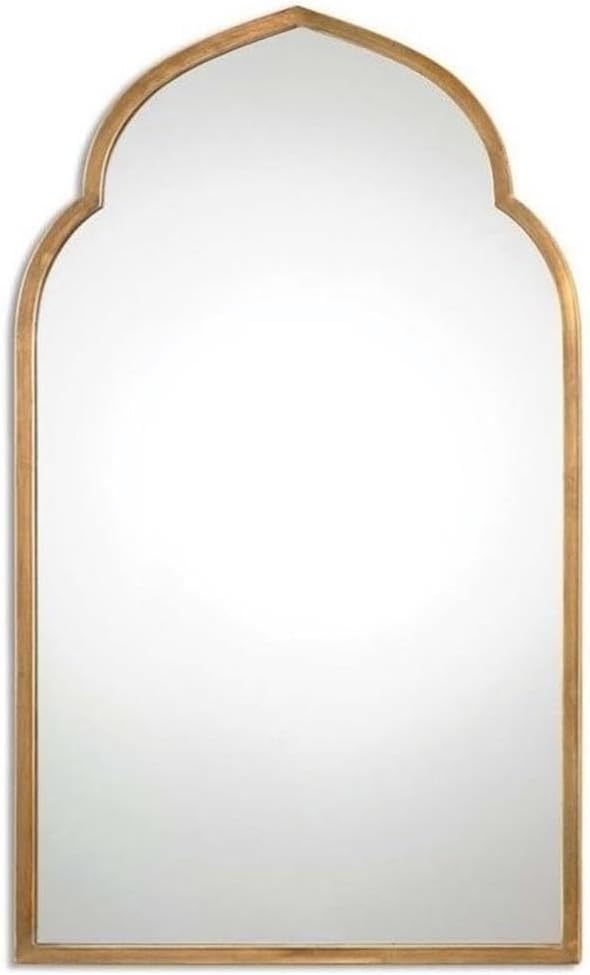
Arch Mirror with Gold Frame
An arch mirror above a console or credenza is the fastest way to give a room an editorial moment. The Beaumont Lane 40x24" Antique Gold Arch Mirror (~$130, Amazon) offers a graceful arched silhouette with a warm antique gold frame — proportioned beautifully for placement above a console or credenza.
Chunky Knit Throw Blanket
Layering is the move. The L'AGRATY Chunky Knit Blanket, 50x60" Chenille (~$40, Amazon) is a handmade crochet chenille throw that adds warmth and weight wherever you put it — and it drapes beautifully over a velvet chair or linen sofa.
Stone Agate Bookends
Bookends do quiet but real work in a room. The Nature's Decorations Agate Bookends (~$35–$45, Amazon) are polished natural agate with rubber non-slip bumpers — each pair is unique, making them feel like collected finds rather than off-the-shelf accessories.
Handwoven Pendant Lamp
A pendant lamp does the work of a table lamp without taking up surface space. The MLTYCZY Handwoven Pendant Lamp (Amazon) features a natural woven shade that casts beautiful patterned light and brings the organic material thread of the room upward.
Gallery Wall Frames
For a gallery wall that looks intentional, start with a coordinated set. The ArtbyHannah Assorted Sizes Gallery Wall Frame Set in Black (~$35, Amazon) includes varied sizes with a layout template — the black finish keeps it crisp and versatile.
Rattan Side Table
Rattan is the material that moves between styles effortlessly. The Bayou Breeze Bali Pari Avalon Scallop Natural Rattan Pedestal Side Table (Wayfair) has a handwoven scallop skirt base — sculptural and organic, adding natural texture and warmth wherever you place it.
Abstract Art Prints
Art bridges the old and the new in any eclectic room. These three board-curated canvas prints work individually or as a gallery grouping:
- Framed Boho Abstract Floral Wall Art, Neutral Black & Beige Botanical, 24x36" (~$40–$60, Amazon) — bold black leaves and soft beige blooms, gallery-framed and ready to hang
- Framed Mid-Century Modern Abstract Geometric Canvas Art, Colorful, 24x36" (~$40–$60, Amazon) — vibrant geometric shapes in a clean contemporary frame
- Framed Boho Abstract Neutral Floral Wall Art, Brown & Cream, 24x36" (~$40–$60, Amazon) — minimalist brown flower painting in a soft neutral palette
When to Call a Professional
There's a limit to how far instinct can take you — and knowing that limit is itself a sign of good taste.
If you're starting from scratch with a large space, navigating a challenging floor plan, or simply want the confidence that comes from a professional eye, a design consultation changes everything. Rather than experimenting piece by piece over years, a consultation can help you see the whole room at once: palette, furniture placement, material story, and all.
Our custom interior design plans are built for exactly this — the homeowner who has great taste, a clear sense of what they love, and a vision that just needs someone to pull it together.
Affiliate links reflect board-approved products, May 2026 — prices subject to change at time of publication.